Bible Trivia - Word Quiz Game
- 4.6
- Rating
- 5.00M
- Installs
- Free
- Price
 Analysis by App-foxy
I approached Bible Trivia - Word Quiz Game as a small daily trivia game rather than as a replacement for a study Bible. That distinction matters. Its appeal is the chance to spend a few quiet minutes answering Bible-related word questions, testing memory, and turning a familiar subject into a light routine. The game is free to start, aimed at Everyone, and comes from Topy Games, so it is easy to understand why it has attracted a broad audience.
My first impression was positive because the idea is focused. There is no need to learn a complicated control scheme or manage a large collection of characters. You open it when you want a quick mental exercise, read the prompt, and work through the answer. For someone who enjoys Bible trivia but does not always have time for a long reading session, that compact format can fit naturally into a morning break, a commute, or a few minutes before bed.
What the game is like in everyday use
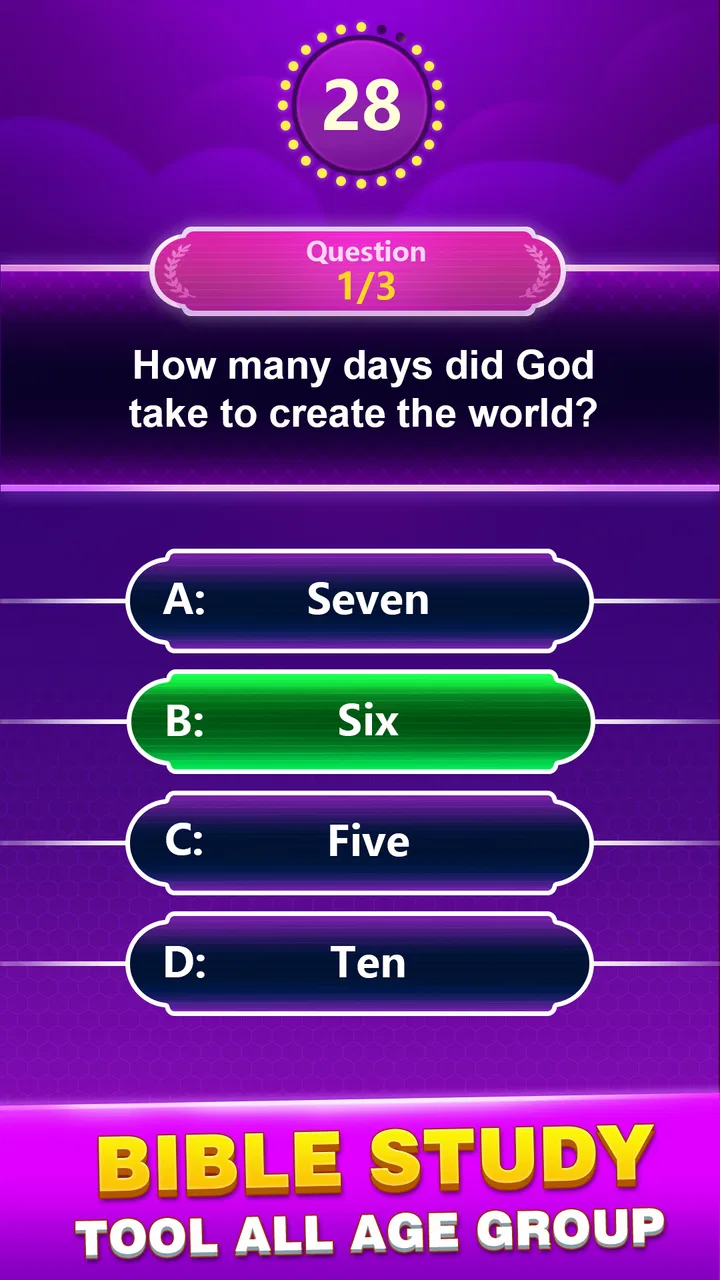
The central experience is built around Bible-themed word quiz play. That makes it more approachable than a dense reference tool, especially for people who prefer learning through short questions instead of reading several pages at once. I found the format best suited to casual repetition: answer a few questions, notice which names or events I had forgotten, and return later with those weak spots in mind.
You May Also Like

 Blood Strike: 2.5 Anniversary
Blood Strike’s Loadouts Turn Every Drop Into a Tactical Gamble
A close look at Blood Strike’s custom loadouts: how fast access to signature weapons reshapes its battle royale rhythm, rewards preparation, and narrows the gap between fights.

 Pandora - Music & Podcasts
Pandora’s Music Is Easy to Start, but Harder to Recover
Pandora’s strength is its low-effort path from a seed to a station. Its weak spot is how much confidence it asks you to place in connection, setup, and quiet recovery.

 8 Ball Pool
 Is Built on Rivalries, Rematches, and Routine
A close look at the rivalries, rematches, shared routines, and unanswered safety questions that turn a quick pool match into a persistent mobile community.

 Samsung Music
’s Quiet Strength Is Playing What You Already Own
Its reach comes less from spectacle than from dependable access to a personal library. That simplicity is both the app’s strongest retention engine and its ceiling.

 AccuWeather: Weather Radar
AccuWeather Review: A Quick, Clear Forecast for Everyday Decisions
For everyday plans, the best forecast is the one you can understand quickly. AccuWeather makes rain timing, radar, and local conditions easy to act on, with a few trade-offs.

 Hill Climb Racing
Why Hill Climb Racing Still Turns Crashes Into One More Run
A tiny car, a bumpy hill and one more upgrade: Hill Climb Racing keeps resurfacing because its simple chaos makes every near-miss feel personal.
More From Our News Desk



It is also a useful option for families or small groups looking for a simple conversation starter. One person can read a question aloud while others answer, although the experience is still designed primarily for individual play. Younger users may enjoy the accessible subject matter, while adults can use it as a memory check. The Everyone content rating supports that broad audience, but parents should still remember that a general age label does not guarantee that every question will match a child’s reading level or prior religious background.
The game’s strongest quality is its low commitment. I do not need to reserve a long session or prepare notes before opening it. That makes it different from a conventional Bible study app, where the main task is reading, comparing passages, or following a structured plan. It is also different from a general trivia app, because the subject stays within biblical knowledge rather than jumping between science, sport, entertainment, and history.
That narrow focus is both the reason to install it and the reason some people will eventually want something else. If I want a quick reminder of biblical names, stories, and vocabulary, the format works well. If I want historical context, verse comparison, pronunciation help, or a guided reading schedule, I would choose a dedicated Bible app or a printed study resource instead. A quiz can reinforce recognition, but it cannot provide the depth of explanation that comes from reading the source material carefully.
Where new players can get stuck
The first point of friction is expectation. The store summary presents the game as a way to relax, play, and grow in faith, but I would interpret that as a gentle companion to personal study rather than a complete learning course. A wrong answer may show me that I need to revisit a topic, yet the quiz format alone may not explain the larger meaning behind it. I get more from the game when I treat each uncertain answer as a prompt for further reading.
Another common stumbling block is assuming that every question will feel equally easy. Familiar stories can create confidence, while questions about less frequently discussed people, places, or wording can expose gaps quickly. That unevenness is not necessarily a flaw; it is part of what makes trivia useful. Still, users who expect a steady beginner-only experience may find some rounds more demanding than anticipated.
I also recommend slowing down instead of tapping through guesses. Word quizzes reward careful reading, and a small difference in phrasing can change what the question is asking. When I rush, I am more likely to confuse a person with an event or remember a related answer rather than the precise one. Treating each question as a memory exercise makes the session more satisfying than chasing a perfect run.
For group use, the main challenge is keeping the session fair. If one participant has spent years studying the Bible and another is encountering the material for the first time, the score can become less interesting than the discussion. I would use the questions as prompts, allow everyone time to answer, and focus on why an answer is correct rather than turning the game into a contest.
Setup checks before blaming the game
The game is free, which removes the biggest barrier to trying it. It supports devices running Android 7.0 or later, so compatibility is worth checking before installation. On an older phone or tablet, I would confirm the operating system first rather than assuming that every Android device can run the current release. The current version is 3.0, and keeping the app updated is a sensible first step if something behaves unexpectedly.
Installation problems are often caused by the device rather than the game itself. Before retrying repeatedly, I would check available storage, confirm that the device has a stable connection, and restart the app store if the download remains stuck. If the installation completes but the game does not open, a full device restart is a simple next check. These steps are ordinary, but they prevent a lot of wasted time and avoid changing settings unnecessarily.
It is also worth distinguishing an account or store issue from an in-game issue. If the app cannot be installed, the problem is probably at the device or store level. If it installs but a question screen fails to load, then reopening the game and checking the connection is more relevant. I prefer making one change at a time, because that makes it easier to identify what actually solved the problem.
In-app purchases range from $0.99 to $49.99 per item, so I would review purchase controls before handing the device to a child or using it in a family setting. The game can be tried without paying, but free access does not mean every optional item follows the same cost. I would also avoid tapping through purchase prompts quickly, especially if a child is exploring the app independently.
The rating history suggests that many players find the experience worthwhile: it holds a 4.7 average from around 64 thousand ratings. That is encouraging, but it should not be read as a promise that every device, reading level, or religious background will produce the same experience. Ratings tell me that the core idea works for a large audience; they do not remove the need to check compatibility and expectations.
Recovering a session when something goes wrong
When a quiz session stops responding, my first recovery step is to leave the app and open it again rather than repeatedly pressing the same control. If the problem continues, I would restart the device and make sure the connection is working normally. These actions are especially useful when the failure appears during loading rather than while answering a question.
I would be cautious about clearing app data or reinstalling immediately. Those actions can remove local progress or settings, depending on how the game handles saved information. Since I cannot assume that every session is backed up, I would use them only after simpler steps fail and only if I am comfortable with the possibility of starting again. A force close is a less disruptive intermediate step than deleting stored data.
Purchase-related trouble deserves a separate approach. If an optional item does not appear after payment, I would avoid buying it again straight away. First I would close and reopen the game, confirm that the device is using the same store account involved in the transaction, and keep the receipt available. Repeating the purchase before checking the account can create unnecessary confusion.
If a question appears incorrect, I would first reread it and consider whether the wording allows more than one interpretation. Trivia questions can feel wrong when I remember a similar passage or a related name. If the issue remains clear after checking a trusted Bible reference, noting the exact wording is more useful than reporting only that “an answer is broken.” That detail gives the developer, Topy Games, something concrete to investigate.
One practical habit is to separate a temporary glitch from a repeatable problem. If an issue happens once and disappears after reopening the game, it may have been a short-lived loading failure. If the same screen fails every time, the device, version, connection, or app installation deserves closer attention. This simple distinction helps me decide whether to keep playing, update the app, or seek support.
When the app is not the real cause
Not every disappointing session points to a technical defect. A weak internet connection can make loading feel slow, while an older device may struggle with any recently updated application. Low storage can interfere with updates, and aggressive battery-saving settings can stop an app from behaving normally in the background. I would check those conditions before concluding that the quiz itself is unreliable.
Reading difficulty is another factor. The Everyone rating means the game is broadly suitable in content, but it does not mean every player will find the vocabulary effortless. Someone learning English, a young reader, or a person unfamiliar with biblical names may need more time. That is a reason to play collaboratively or keep a Bible nearby, not necessarily evidence that the game is poorly designed.
Religious expectations can also shape the verdict. This is a Bible trivia game, so it is a good match for users who want that subject. It is not the right choice for someone seeking a neutral general-knowledge quiz or a full comparative study of different traditions. Even among Christian users, preferences about translation, terminology, and difficulty can vary. I would treat the game as a casual resource and compare uncertain answers with the Bible edition or study material I normally trust.
Notifications, interruptions, or purchase prompts can affect enjoyment as much as the questions do. If I am using the game during a quiet devotional moment, I would silence unrelated notifications and avoid playing while distracted. A rushed session makes mistakes feel more irritating and reduces the reflective side of the experience. The best use is short and intentional, not constant background tapping.
Three ways to get more from short sessions
My first useful routine is the “review question” method. Instead of closing the game immediately after a wrong answer, I make a mental note of the subject: a person, place, event, or term. Later, I look it up in a trusted Bible source. This turns a missed answer into a small study path and prevents the quiz from becoming a cycle of guessing without learning.
The second is to use a two-pass approach. On the first pass, I answer only when I am reasonably confident. On the second, I slow down on uncertain wording and consider related possibilities. This reduces careless mistakes and helps distinguish a genuine knowledge gap from a hurried tap. It is particularly useful when I am playing with someone else and want the discussion to be about the material rather than reaction speed.
The third is to match the session to the setting. A solo round works during a short break, while family play is better when everyone can discuss the answers. I would not use the game as the only activity in a youth lesson or study group, but it can provide an easy opening question before reading a passage. That gives the quiz a clear purpose instead of asking it to carry an entire teaching session.
There is also a useful trade-off in keeping the game on a secondary device. If my main phone is full or frequently interrupted, an older compatible tablet can make the experience calmer, provided it meets the Android requirement and has enough space. On the other hand, installing it on a shared family device makes group play easier but increases the importance of checking purchase settings and user expectations.
How it compares with other ways to learn
Compared with a standard Bible app, this game is faster and more playful but much less comprehensive. A Bible app is better when I want to search a phrase, compare passages, follow a reading plan, or study context. The quiz is better when I want active recall. I would combine them rather than choosing one as a universal replacement: play a short round, then read the relevant passage when a question exposes something I do not remember.
Compared with a general trivia game, the subject focus makes this a more consistent choice for faith-based practice. A general app offers broader variety and may be more entertaining for a mixed group, but it will not provide the same concentrated Bible vocabulary. If my household has different interests, a general trivia game may hold attention longer; if the goal is biblical recall, this focused option is more useful.
Compared with flashcards, the game feels less like deliberate memorization. Flashcards let me choose exactly which verses, names, or terms to review and repeat difficult cards on a schedule. This quiz is more spontaneous and easier to start, but I have less control over the learning path. Users preparing for a test or trying to memorize specific passages should use flashcards or structured notes alongside it.
Compared with a printed quiz book, the app is more convenient and easier to pick up for a short session. A book may be preferable for people who want no screen time, no interruptions, or a slower group discussion. The choice depends on the setting: I would reach for the app when convenience matters and a book when the activity is meant to be shared around a table.
Who should install it and who should skip it
I would recommend it to casual Bible readers, families wanting an accessible question game, and anyone who enjoys testing memory in short bursts. It is especially suitable for people who already know some biblical stories but want a reason to revisit names and details. The free entry point makes experimentation easy, while the Everyone rating keeps the intended audience broad.
I would be more cautious recommending it to someone looking for a complete Bible-learning curriculum. It does not replace careful reading, commentary, or discussion with a knowledgeable teacher. I would also steer away from it if the main goal is a broad trivia experience, highly controlled memorization, or an entirely offline, no-screen activity. In those cases, a general trivia app, flashcard system, study Bible, or printed resource will be a better fit.
Its popularity is substantial, with over 5 million installs, and the review volume is also notable at around 4.4 thousand written reviews. Those figures tell me that the concept has reached well beyond a tiny niche, but my recommendation still depends on how the reader wants to use it. A large audience cannot turn a focused Bible quiz into a general-purpose learning platform.
My practical verdict
After using it as a short-form trivia companion, I see Bible Trivia - Word Quiz Game as a pleasant, focused way to make biblical recall more active. Topy Games keeps the premise understandable: open the game, answer Bible-related word questions, and return when you want another brief challenge. The 4.7 average gives it a strong reputation among players, but its real value is more personal than numerical.
The best results come from setting it up carefully, keeping expectations realistic, and using missed answers as invitations to read further. Check that the device runs Android 7.0 or later, keep the current version installed, and review purchase controls before sharing the device. If a session fails, restart calmly and distinguish loading problems from question-quality concerns before taking disruptive steps.
My final recommendation is positive for the right audience. I would install it for relaxed daily practice, a family quiz moment, or a quick memory check between longer study sessions. I would not rely on it as my only Bible resource, and I would choose another tool when I need detailed explanations or a broader trivia mix. Used in that supporting role, it offers a simple way to turn a few spare minutes into thoughtful, faith-centered play.
FAQs for Bible Trivia - Word Quiz Game
01What is Bible Trivia - Word Quiz Game?
Bible Trivia - Word Quiz Game is an engaging app designed to test your knowledge of the Bible through a series of fun and challenging quizzes. Whether you're a Bible scholar or just starting to explore, this app offers questions that range from easy to difficult, covering various aspects of the Bible.
02Is Bible Trivia - Word Quiz Game suitable for all ages?
Yes, the app is designed to be family-friendly and suitable for users of all ages. It provides questions that cater to different knowledge levels, making it an excellent educational tool for children and adults alike. Parents can use it as a fun way to encourage learning about the Bible with their kids.
03Does the game require an internet connection to play?
Bible Trivia - Word Quiz Game can be played offline, allowing users to enjoy quizzes without an internet connection. However, certain features like updates or additional content might require an internet connection to download. This makes it convenient for users who want to play on the go.
04Are there in-app purchases or ads in the game?
The app is free to download and play, but it may contain ads that can be removed with an in-app purchase. Additionally, there might be options to purchase extra content or features. Users can choose to enhance their experience by opting for these purchases, but it's not necessary to enjoy the basic game.
05How often is new content added to Bible Trivia - Word Quiz Game?
The developers regularly update the app with new questions and features to keep the content fresh and engaging. Users can expect periodic updates that introduce new quiz categories, questions, and improvements based on user feedback. This ensures a dynamic and evolving gaming experience.
Pros
- Engaging questions enhance biblical knowledge.
- Colorful design makes learning enjoyable.
- Offers offline play for uninterrupted access.
- Varied difficulty levels suit all users.
- Frequent updates with new content.
Cons
- Ads can disrupt the gaming experience.
- Limited hints may frustrate some players.
- Some questions may be repeated.
- Requires in-app purchases for extra features.
- No multiplayer mode for group play.

Bible Trivia - Word Quiz Game
Gallery